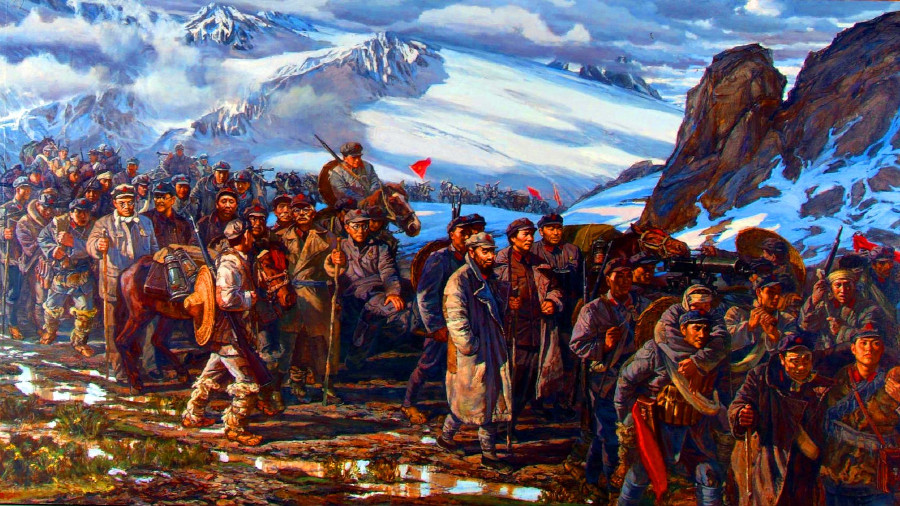
The Long March is a manifesto, a propaganda force, a seeding-machine
In the autumn of 1933, the Chinese Communist Party (CCP) was on the brink of annihilation. Nationalists had taken control of the country and launched a major attack against their base in Jiangxi, a southeastern province. In October 1934, the Communists were forced to abandon their stronghold and break through the Nationalist blockade. Some 80,000 set out on an extraordinary journey of 3,700 miles (6,000km) that lasted 368 days. It became known as the Long March.
Guided by their future leader Mao Zedong, the Communists faced bombs and machine-gun fire from the air and were constantly under attack by Nationalist troops on the ground. They traveled mostly at night, the unit splitting into different columns to make them harder to spot.
The Tibetan mountains, Gobi Desert, and miles of wilderness stood between them and their goal: to reach the safety of northern China and establish a new Communist base. Hundreds died of starvation: of the original 80,000 marchers, only about 8,000 survived. Far from being viewed as a failure, however, their feat was hailed as a triumph of endurance and ensured the survival of the CCP.
Unifying the nationIn 1895, China had suffered a heavy military defeat against Japan. Anti-Japanese feeling swelled following Japan’s aggression against China during World War I. Huge protests erupted after the 1919 Treaty of Versailles handed former German colonies in China to Japan. In the wake of these protests, communist ideals gained support, and in 1921 the CCP was founded. The Kuomintang, a Nationalist party, also grew and by the mid-1920s had begun unifying the country.
Massacre in ShanghaiNationalists joined forces with Communists in 1926 under Chiang Kai-shek (Jiang Jieshi) in the Northern Expedition to regain territories controlled by regional warlords. During the expedition, as the CCP increased in strength, a bitter rivalry led to an attack by Nationalists against the CCP in Shanghai, in April 1927. Hundreds of Communists were arrested and tortured. The massacre triggered years of anti-Communist violence, and the Communists retreated to the Jiangxi countryside.
The struggle for survivalAfter the Long March, the CCP regrouped in the north. Nationalists and Communists were forced into an uneasy alliance in 1937, when Japan invaded China. By 1939, large areas in the north and east had been conquered. After Japan’s defeat in World War II, tension between Nationalists and Communists flared up again, leading to civil war in 1946. The Communists won after massive battles with more than half a million troops on either side. On October 1, 1949, Mao Zedong created the People’s Republic of China.
The Long March was a feat of remarkable endurance. To the survivors, it provided a deep sense of mission and contributed to the perception of Mao as a leader of destiny and revolutionary struggle.
SHARE THIS ARTICLE



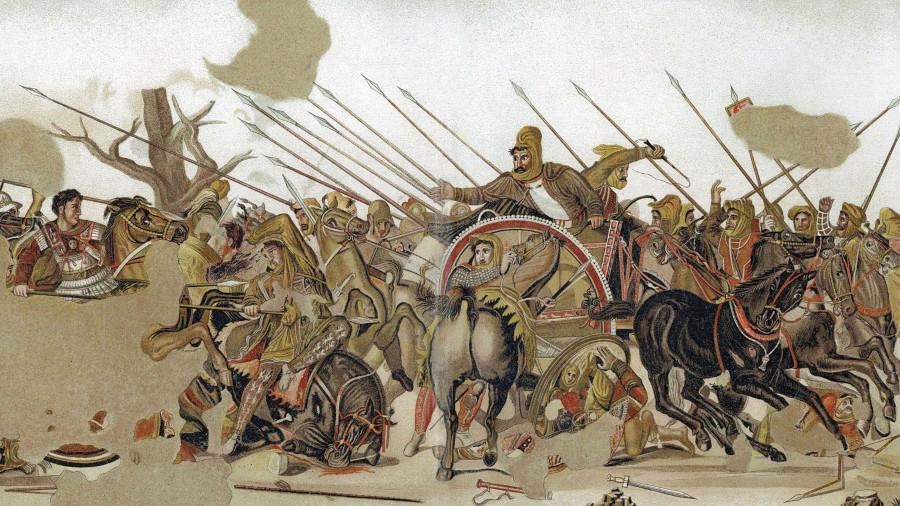
There is nothing impossible to he who will try
In one of the fastest and most daring military expansions in history, Alexander the Great, the young king of Macedon in the Balkans, blazed a trail of conquest across most of the known world of his day.
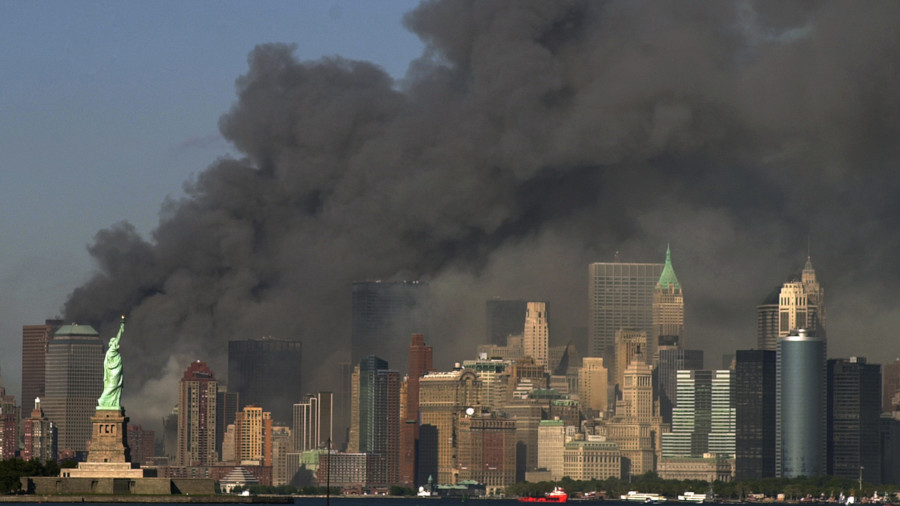
Today, our fellow citizens, our way of life, our very freedom came under attack
On September 11, 2001, a group of Islamic extremists launched a devastating attack against the US.
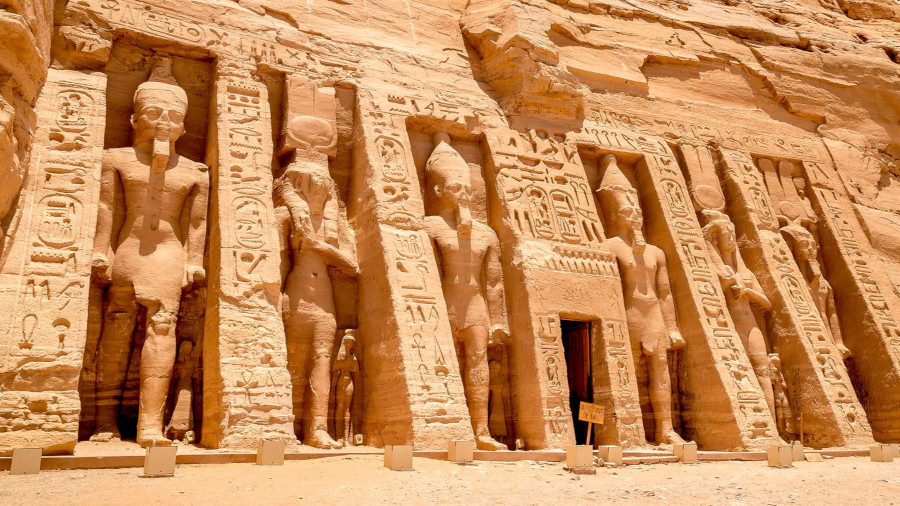
All the lands have fallen prostrate beneath his sandals for eternity
Around 1264 bce, the Egyptian pharaoh Ramesses II (c.1278–1237 bce) had two mighty temples hewn out of the cliffs on the west bank of the Nile in southern Egypt.
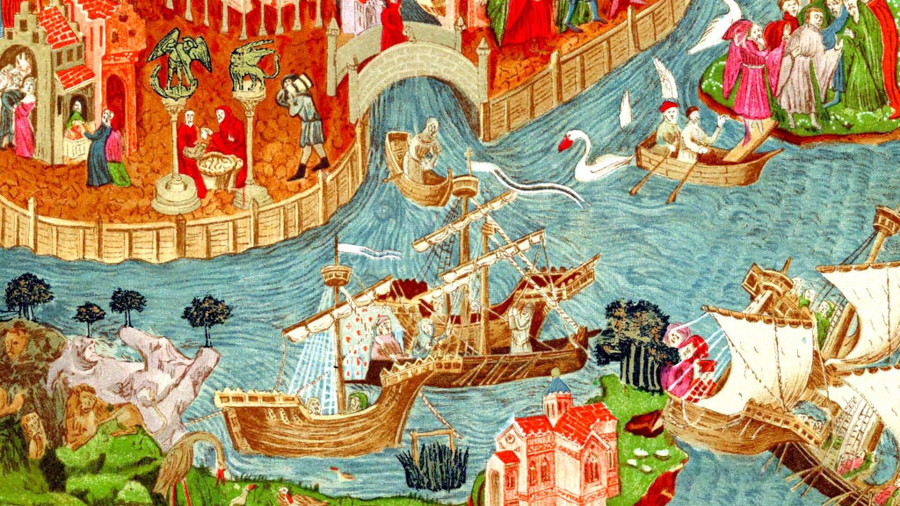
I did not tell half of what I saw, for I knew I would not be believed
Venetian merchant Marco Polo’s arrival at Chengdu, the capital of the Great Khan Kublai, in 1275 marked the end of a four-year journey.

John Doe
Lorem ipsum, dolor sit amet consectetur adipisicing elit. Impedit quibusdam amet maiores molestiae vitae eius quasi at dignissimos totam saepe commodi vel.